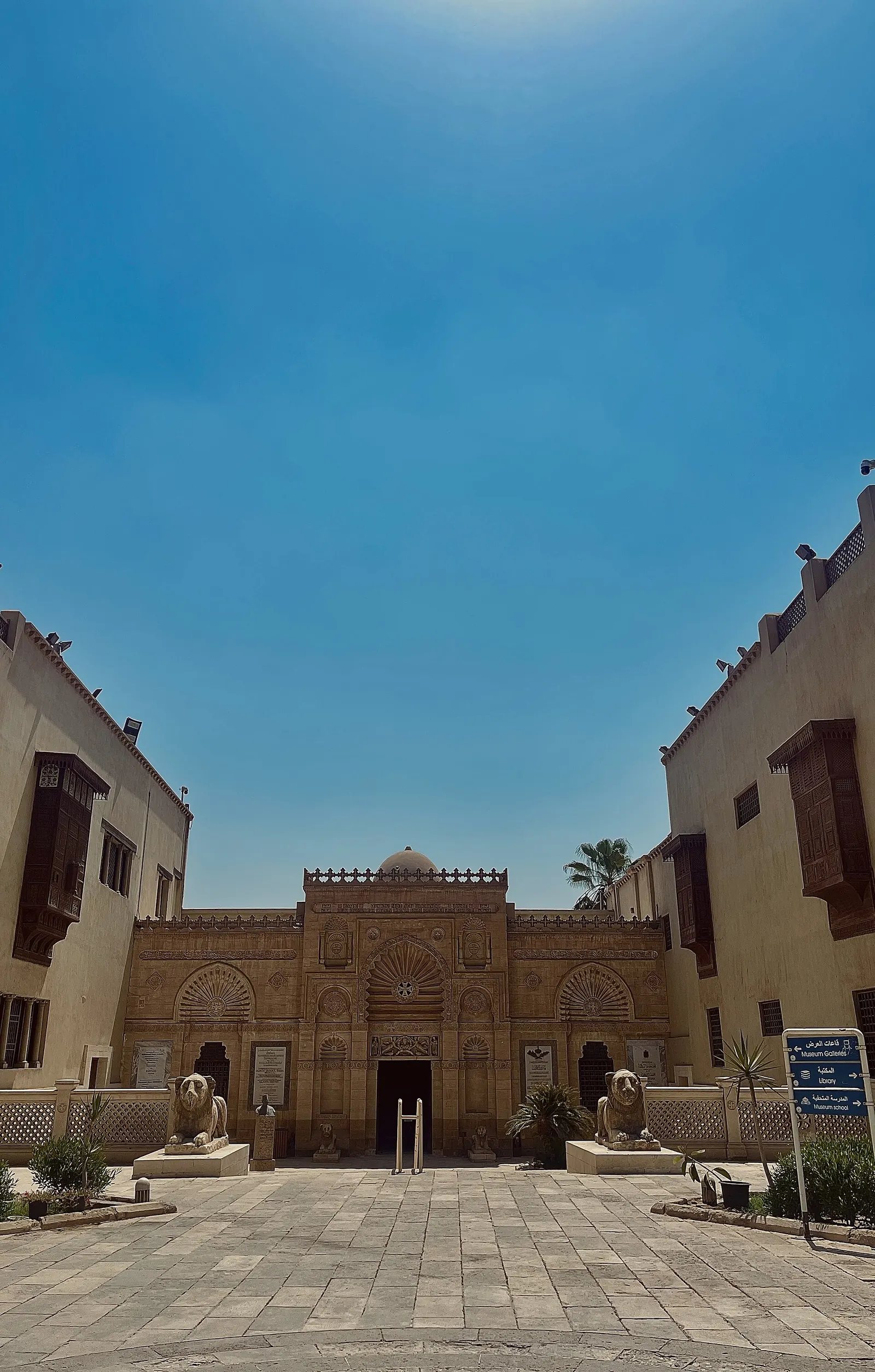
This plan uses the Coptic Museum as the stable interpretive anchor. Nearby churches, synagogue access and lanes are optional layers whose schedules, services and security conditions must be treated separately.
BEFORE LEAVING
Plan for a living district.
- Check museum and worship-site hours separately.
- Review clothing and photography expectations.
- Confirm current entrances and security routes.
- Ask about uneven surfaces and step-free alternatives.
Choose a material thread—wood, stone, textile or manuscript—to carry from the museum into the architecture outside. This creates continuity without treating every building as an exhibit.
THE DAY SEQUENCE
Let thresholds set the pace.
Orient without collecting sites
Identify the museum entrance, an agreed meeting point and the route back to transport. Notice security and level changes before committing to the whole district.
Coptic Museum
Begin with the building, then follow three materials. Give manuscripts slower attention and do not use flash where prohibited.
Leave the heritage sequence
Find shade, water and food where appropriate. A break should not double as a rushed transfer or another attraction.
One or two active sites
Enter only where public access is current. Keep voices low, do not interrupt services and follow local photography guidance.
Return to one comparison
Compare one museum fragment with an architectural feature still in use, while keeping original context and modern reconstruction distinct.
WHEN ACCESS CHANGES
The museum alone is a complete visit.
A closed religious site does not make the day fail. Replace it with a shaded district walk only if conditions are comfortable; otherwise end after the museum and break. Do not pressure staff or worshippers for exceptions.
Live checks
Confirm museum entry, active rooms, worship schedules, local access conditions and accessibility on the day. This project does not arrange site entry.