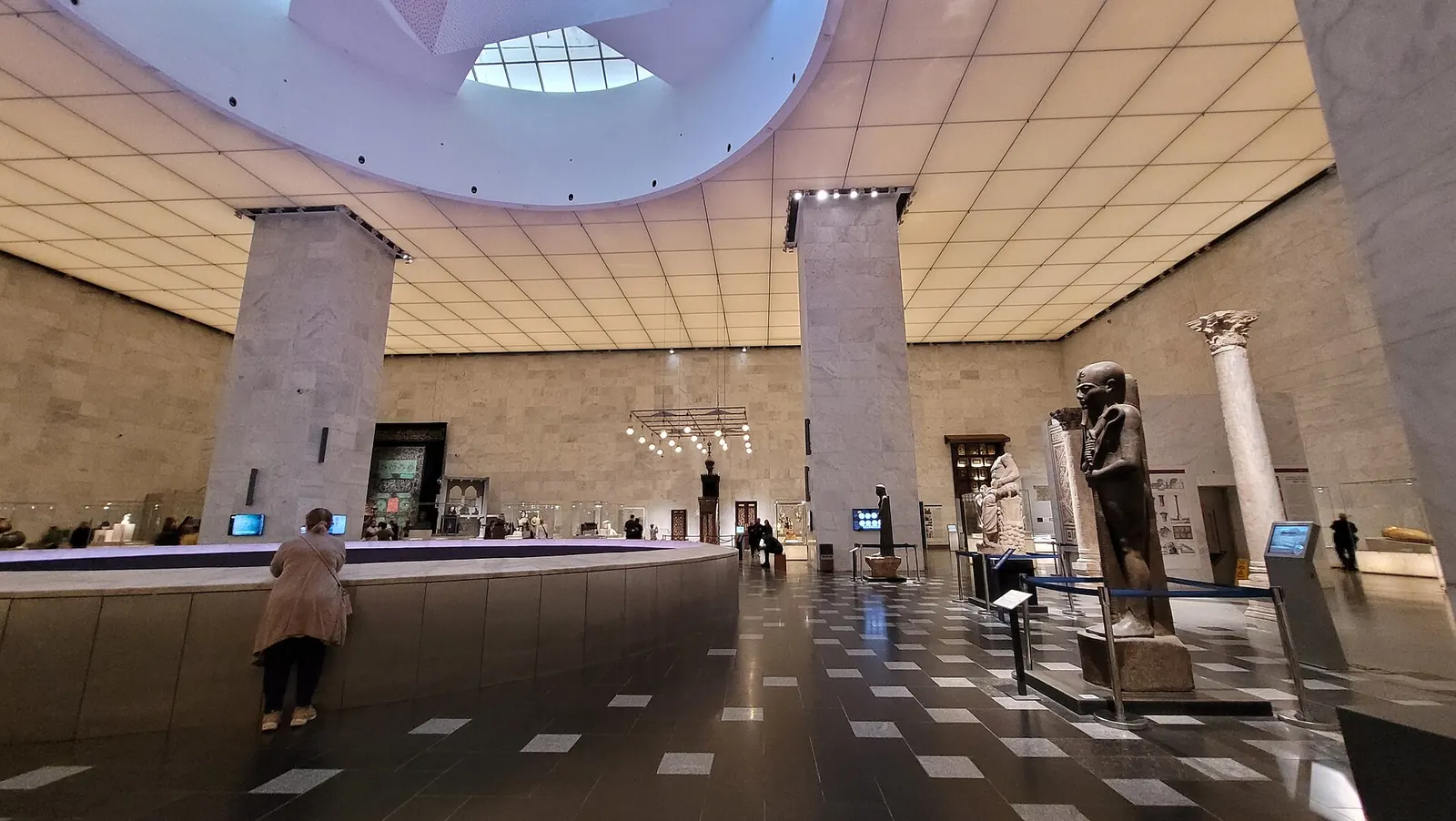
This is not a simplified adult highlights tour. It gives children real choices, gives adults a small number of interpretive goals and treats food, toilets, noise, human remains and fatigue as core planning facts.
CHOOSE THE MUSEUM
Fit matters more than fame.
Prefer clear circulation, available toilets, seating, food arrangements you understand and a collection matching the child’s current interest. A smaller regional museum may outperform a huge collection. Ask the museum directly about strollers, lifts, family facilities and bags.
- Show one exterior photo before travel.
- Explain security and quiet-room expectations.
- Agree on a meeting rule and exit signal.
- Discuss funerary objects and human remains in advance.
THE VISIT SEQUENCE
Give each block a mission.
Toilet, map, one rule
Orient first. Use one behavioural rule at a time rather than delivering a long lecture at the entrance.
Find something enormous
Let the child choose. Ask how it was moved or supported rather than demanding a correct name.
Change body position
Sit, stretch or move through a wide circulation space without running or blocking others.
Find evidence of a hand
Look for a handle, fingerprint, repair, tool mark, writing stroke or woven edge.
Find something still used today
Compare a vessel, game, item of clothing, writing tool or food practice without claiming it remained unchanged.
Choose one return object
Each person names one object worth seeing again. Leave before the plan requires bargaining.
SENSITIVE DISPLAYS
No child owes the museum a mummy visit.
Explain that some museums display human remains and funerary objects. Use direct, calm language suited to the child; offer a route around the display; never surprise them for a reaction or photograph. Respect all restrictions and other visitors.
Live checks
Confirm family facilities, strollers, food, toilets, lifts, sensitive galleries, camera rules and current exits with the chosen museum.