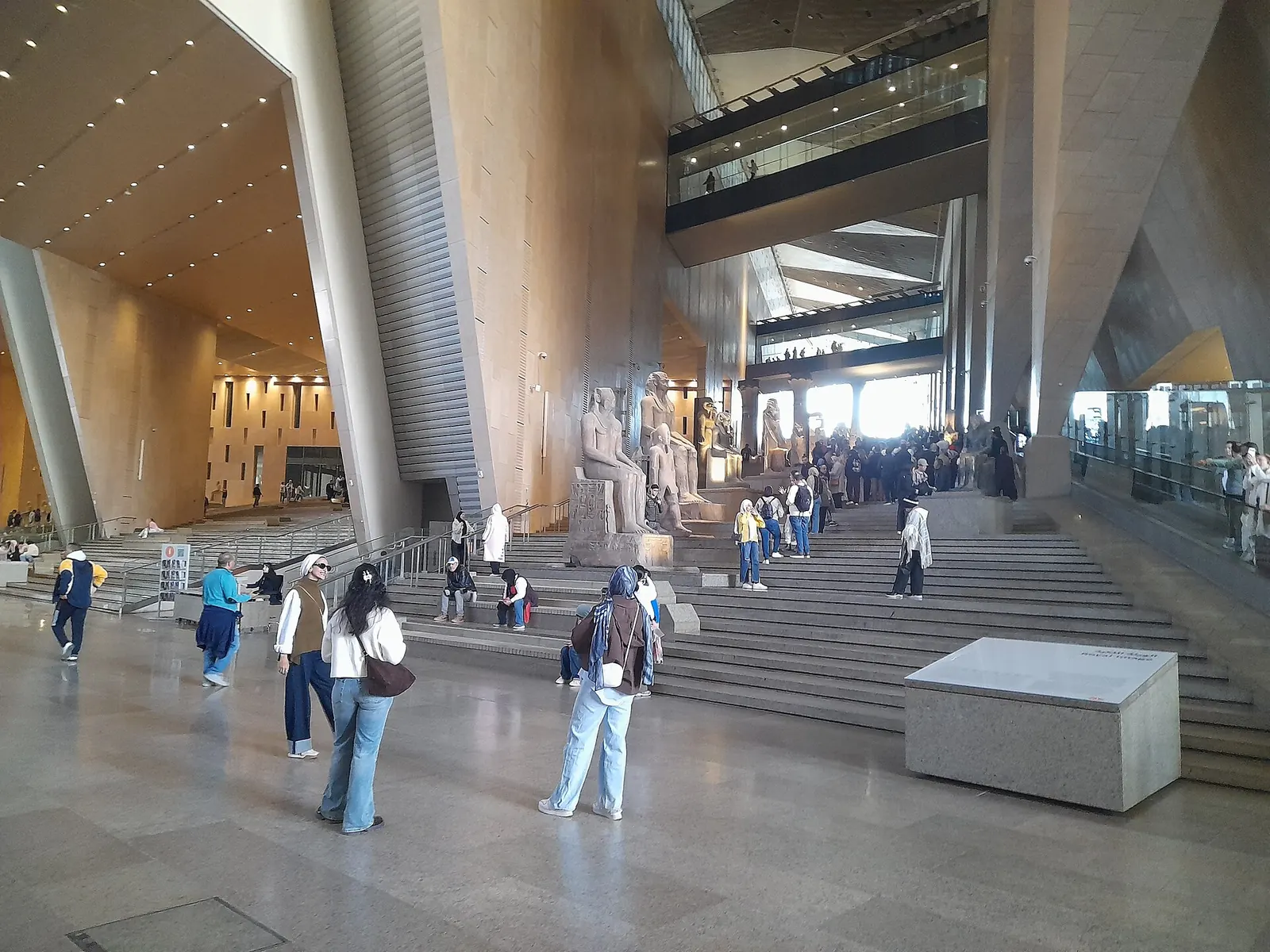
This plan treats the Grand Egyptian Museum as the day’s anchor rather than squeezing it between the pyramids and a cross-city evening. It works because it protects attention from the scale of both the collection and the journey.
BEFORE LEAVING
Confirm the day you actually have.
- Check the current public entrance and opening period.
- Confirm which gallery areas are active.
- Ask about step-free routes or mobility support needed.
- Check bag, food, water and camera rules.
Choose one content thread before travel: royal burial, writing, sculpture, craft or a period. A thread reduces decisions without depending on a particular masterpiece being displayed.
THE DAY SEQUENCE
Use broad bands, not brittle times.
Arrive and absorb the friction
Keep a generous buffer for traffic, drop-off, walking, entry procedures and orientation. Do not start the mental museum clock when the vehicle reaches Giza.
Architecture and monumental scale
Use the approach, atrium and grand stair as the first gallery. Choose one large work and view it from multiple distances.
Follow the chosen thread
Limit the route to a few connected sections. Record five objects, not fifty photographs.
Take a seated break
Stop before fatigue. Eat only where allowed, hydrate and decide whether the final collection block still deserves attention.
One major collection and a clean exit
Finish with one group, then return to a broad architectural view. Leave enough capacity for the journey away from the campus.
THE PYRAMIDS QUESTION
Nearby is not the same as easy.
The Giza plateau and museum are geographically related but each can consume a serious visit. Combine them only when current access, transport, weather and the group’s walking capacity are known. If combined, reduce the museum route before shortening the break.
Live checks
Verify entrance, operating hours, gallery access, campus transport and accessibility with official sources. This is a pacing framework, not a reservation or admission product.